
Through the 1980s
Desert Hearts, Twice in a Lifetime, A New Life, Heartburn, The Good Mother

This post completes the 1980s, with the exception of The War of the Roses which will get its own post. I discuss five movies in this post, but we are still in the period I call the Age of Deuterogamy, when divorce is such a given that it is often part of the background to a film’s characters, not a major focus of the plot. There are many examples in the 1980s of this background-level divorce element, from a divorced Sally Field starting over in Murphy’s Romance to Billy Crystal’s failed marriage in When Harry Met Sally.[1]
Desert Hearts (1985)
Set in 1959 and filmed on location in Reno, Nevada, Desert Hearts at first takes us back to the Reno divorce movies of the past. As in those movies, a woman arrives at the Reno train station and books temporary residence at a divorce ranch, a six-week stint while her divorce is finalized. Played by Helen Shaver, she is an attractive but very tightly-wrapped professor of English literature from New York City. She is also a lesbian who finds herself falling for a local artist and free spirit (Patricia Charbonneau).
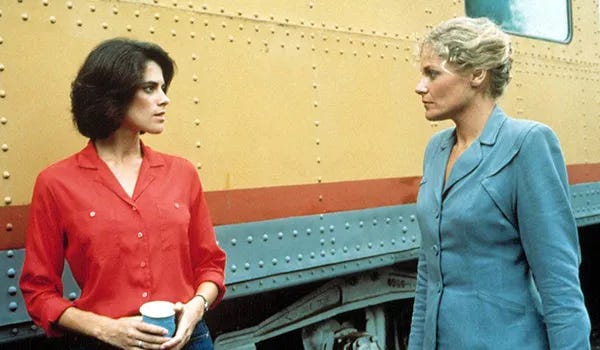
This Reno divorce leaves its protagonist for the first time without the protective fiction of her marriage or the structures of her professional life in New York as guardrails against emotional connection and sexual passion. She removes her wedding ring to the sound of Patsy Cline’s “Crazy,” but we must wait to see if she will let a new, more honest and more frightening relationship bloom, or will end her six weeks with a train eastward and a flight from herself.
In its time, Director Donna Deitch’s film was lauded for treating a lesbian romance without sensationalism. In our own age of woke Hollywood and endless Pride celebrations, the movie feels refreshing for not being annoyingly self-congratulatory, and not giving us an enemy in conservatives or heterosexual men.
In fact, the major conflict in the movie has nothing to do with any disapproval of lesbianism, but with the ambivalence of the ranch owner, who has been something of a mother to Charbonneau and doesn’t want to see her grow up and leave the nest. And the discomfort that Shaver feels about their relationship has as much to do with age and class differences as with it being same-sex.
Twice in a Lifetime (1985)
The idea here seems to have been to do a divorce movie with working class characters, but the Twice in a Lifetime seems not to understand anything about work or money in 1980s America. Gene Hackman plays a factory worker who falls for Ann-Margret and leaves his wife, to the outrage of his grown kids.
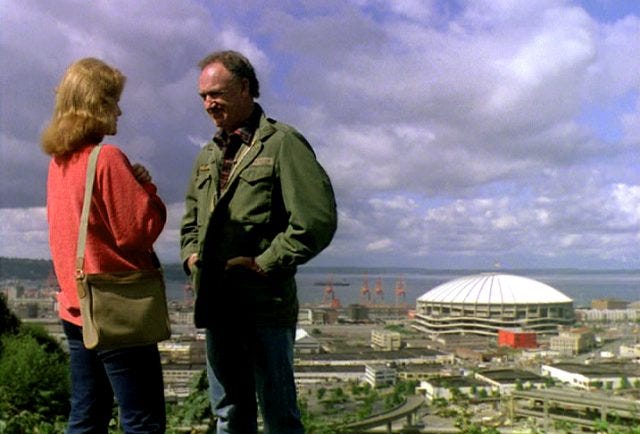
The movie is mainly working-class tropes: Budweiser and Ding-Dongs, the bingo hall. Hackman and best friend Brian Dennehy wear baseball jackets, sing the theme to Rocky, and punch each other in the arm a lot. (The finely layered Hackman has never been all that believable as prole or tough guy.) The economics are confused. The men wait anxiously for day wages at the mill (we don’t know what it mills), but no one seems to have to work all that much. At one point, Ann-Margret goes into a jewelery store to buy Hackman a gold Swiss watch, and is surprised that it is beyond her means, as if she is not a middle-aged bartender but a college kid living away from home for the first time.
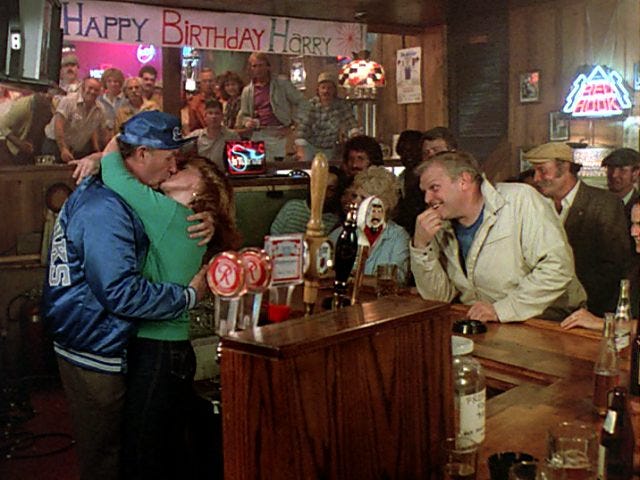
The movie assumes that divorce in lower-middle class is the same as in upper-middle-class families, just with sports bars, daytime television, and domestic beer. So Hackman’s ex-wife (Ellen Burstyn) is going to take some Me Time: “I can’t go back to work. I’m not ready to. When I’m ready, I will. I don’t know who I am. What I mean anymore. I don’t know what I’m doing here. When I figure that out, then I’ll be ready to go back to work, but right now I’m not.” Hackman, meanwhile, spends time strolling around and buying flowers in an expensive downtown neighborhood, with an uplifting Pat Metheny soundrack as backdrop. Divorce as upward mobility.
A New Life (1988)
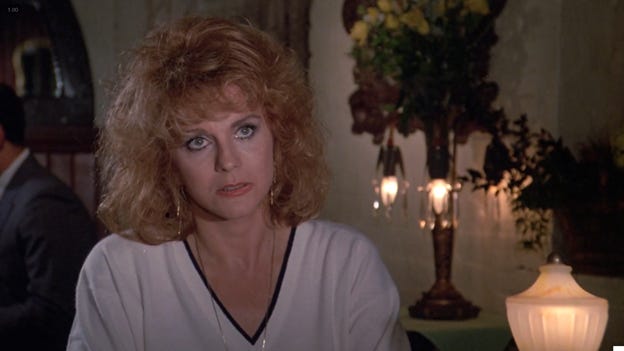
I’m not going to say that Alan Alda’s A New Life is a great movie, or even a good movie. But it’s watchable, with memorable scenes and wonderful Manhattan photography. (Kubrick cameraman Kelvin Pike did the cinematography). More importantly, it is the 1980s post-divorce movie, and perhaps even the gold standard for the Age of Deuterogamy in its dramatization of two divorced spouses who both develop new, post-marital lives. I know, I had never seen it either.
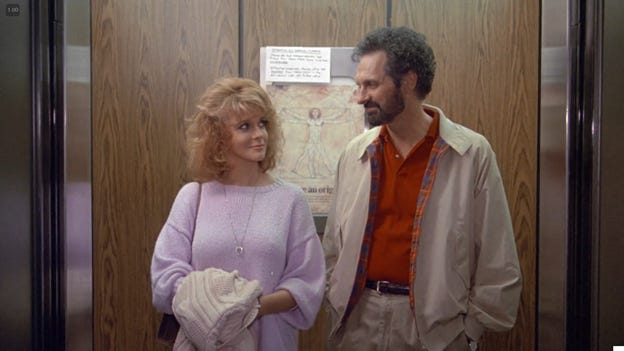
Alda stars as a Wall Street trader who has provided for but never attended to his wife of many decades. She is played by Ann-Margret, who can afford the gold watch in this movie. Alda’s character starts out unlikeable, snarling, stooped, with a paunch. (He’s wonderful when he plays a jerk, and Woody Allen would cast him as the slimy television producer in the following year’s Crimes and Misdemeanors.)
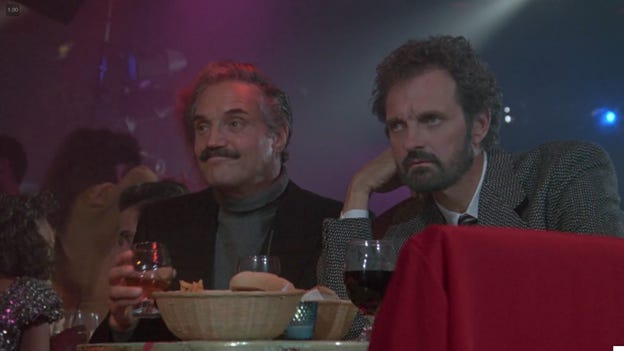
Early on, Ann-Margret decides she doesn’t want to live the rest of her life as the afterthought who lies next to her husband while he yells at the basketball game on the TV. Divorced, they are both thrown into the dating scene of the 1980s. This is a tough gauntlet to run but, in time-honored tradition, going back to the DeMille silent movies, it humanizes and reforms Alda.
Not to reunite him with his wife, though, but to prepare him for what turns out to be a new marriage with a younger woman and a late-life second round at fatherhood. The movie’s title isn’t only about divorce. Alda’s new wife insists that he accompany her through the new birthing culture of Lamaze classes. This isn’t played for humor: there is a scene in which Alda’s new wife has an amniocentesis performed that is not for the faint of heart, and an ultrasound showing the baby seems to reflect a Reagan era vibe, quietly conservative in terms of abortion, if not divorce.
The movie is an enjoyably self-aware timepiece. We get the Wall Street trading floor, coke, late-stage disco, arcade games, green-on-black computer monitors, parties in Tribeca lofts, references to Entertainment Tonight and Miami Vice. Alda sports the permed hair and beard that Billy Crystal will wear in the following year’s When Harry Met Sally. The width of the shoulders on both men’s and women’s jackets in this film is extraordinary.
The film tries to give Ann-Margret’s post-marital life equal time, but the character is underdrawn and her new boyfriend an annoying sculptor. But it’s worth it for the impact of the final scenes, when, without any sexual or romantic tension between them, Alda asks Ann-Margret’s advice about his new marriage.
Alda. “It’s hard to say this. My second marriage is starting to have some problems”
Ann-Margret. “Oh, I’m sorry to hear that.”
Alda. “It’s not fair for me to drag you through this, but I thought that maybe you could help me figure out what I’m doing wrong.”
This confession of his shortcomings as a man and husband, enables her to extend him some perhaps needed forgiveness and, moreover, helps her clarify her own problems in her current relationship. The exchange isn’t about their own marriage, but about the two people they were and are. In a stunning final scene, we see Ann-Margret, who has dumped the sculptor, speeing through Manhattan on her new moped and, though neither is aware of the other, she passes by Alda pushing a baby carriage. Credit to Alda for a movie about people learning to be happy after divorce and, by taking responsibility for themselves, becoming better people in their happiness.
Heartburn (1986)
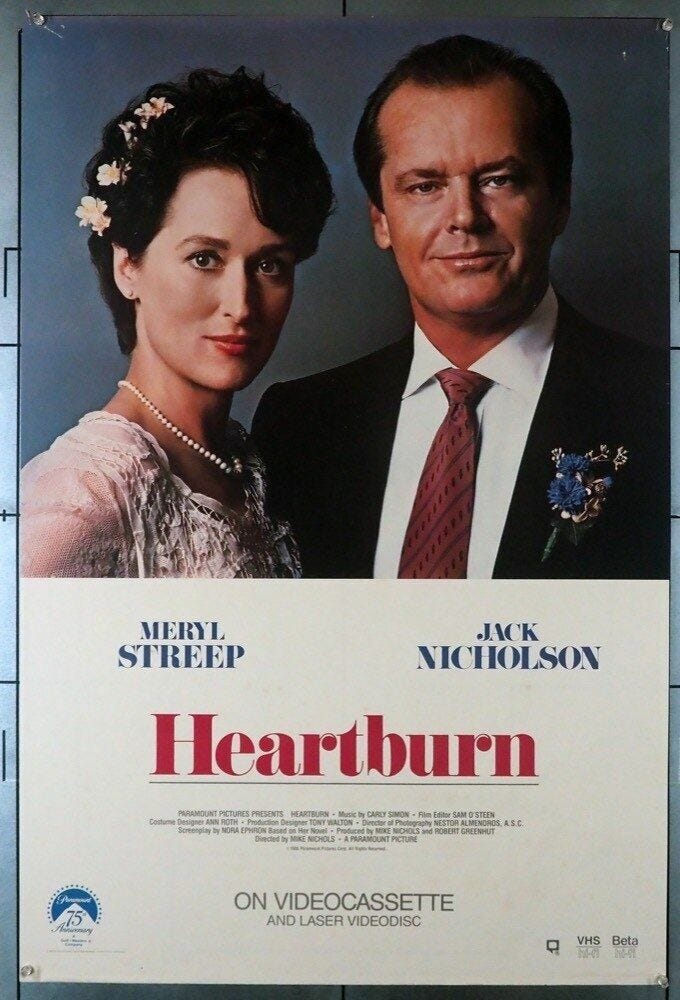
Writer Nora Ephron’s second marriage (the first ended in divorce) was to Washington Post reporter Carl Bernstein, who was discovered to be having an an affair while Ephron was pregnant with their second child. They divorced in 1980 and a few years later Ephron published Heartburn, a short, talky novel about the marriage and its ending. A few years after that, she wrote the screenplay for a film adaptation, directed by Mike Nichols and with Meryl Streep and Jack Nicholson playing the Ephron and Bernstein characters.
The novel is beach reading for the NPR set of the time, ironically sentimental and sentimentally ironic, full of cute lines and shtick about Jewish-y neuroses. Husband and wife are relentlessly materialistic, acquisitive, bourgeois (“we had things—God, did we have things”). And of course liberal:
When I was in college, I had a list of what I wanted in a husband. A long list. I wanted a registered Democrat, a bridge player, a linguist with particular fluency in French, a subscriber to The New Republic, a tennis player.
But Ephron can’t step very far outside of her cultural-political-socioeconomic mindset, and so the book fails to work as satire. Since neither character is interesting and, with the exception of the final few pages, there is no revealed heart to the book that might make us understand why the marriage is to be mourned, it doesn’t work as drama or confession either.
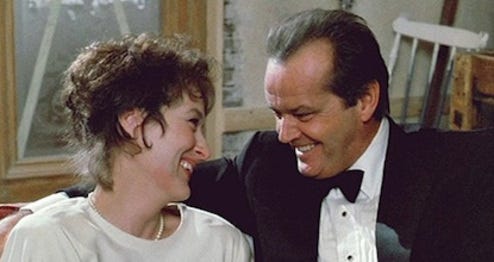
The movie is faithful to the book, and so a bore. Husband and wife deal with their home remodel, the hired help, the dinner parties. But why should we care? Even Streep and Nicholson can’t save these blotches of elite dullness. Whenever their performances spark some interest, it feels like they’re breaking character.
The Good Mother (1988)
In Kramer vs. Kramer (1979) a naked JoBeth Williams, who has spent the night with Dustin Hoffman, unexpectedly encounters Hoffman’s seven year old son the next morning in the hallway. She awkwardly tries to cover herself while the boy asks her if she likes fried chicken.
It’s played for comedy, but touches on two serious issues. One is children’s exposure to (or protection from) nudity and adult sexuality. The second relates to the divorce movie: how divorce impacts childrearing around these issues, with adults in new sexual relationships with people who are not the parents of those children.
These issues have, if anything, become more fraught today. Would the scene in Kramer vs. Kramer be included in a PG drama made now? Some of this greater hesitation is due to a slow-motion cultural recoil after the taboo-breaking of the 1960s and 70s. Some is due to the lack of a shared sexual morality today in general. Divorce exacerbates these issues because of separate households, changing relationships, and unclear expectations.
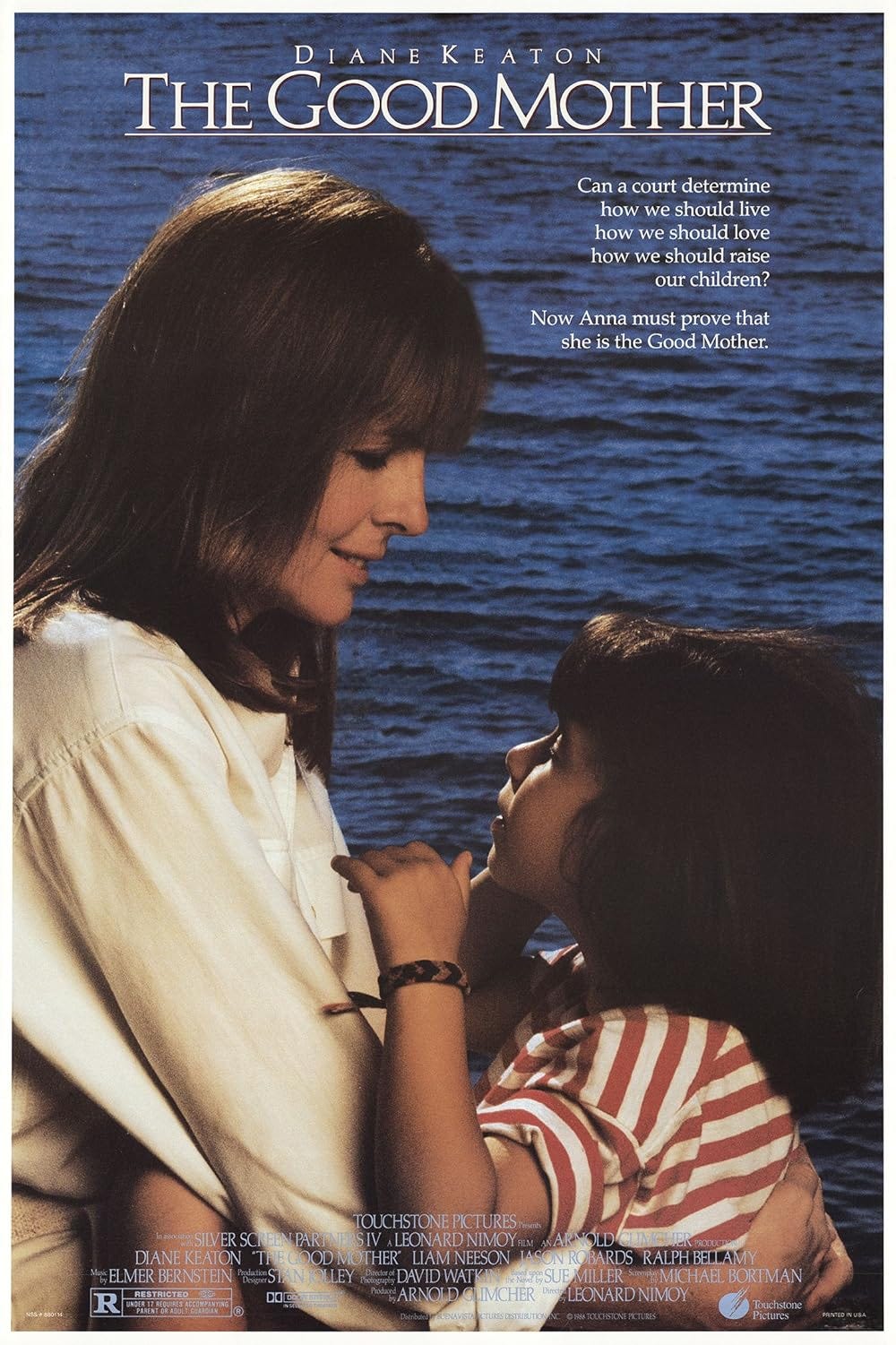
The Good Mother, based on a popular novel by Sue Miller and directed by Leonard Nimoy, deals with an extreme instance of this. Diane Keaton plays an amicably divorced woman who shares custody with the father of her six year old girl. Having been raised in a very starchy WASP family, Keaton’s character has spent her life feeling ashamed of her body and uncomfortable with sex. This changes when she meets a hunky, freewheeling artist (Liam Neeson), whose love and passion make her comfortable in her skin and happy for the first time.
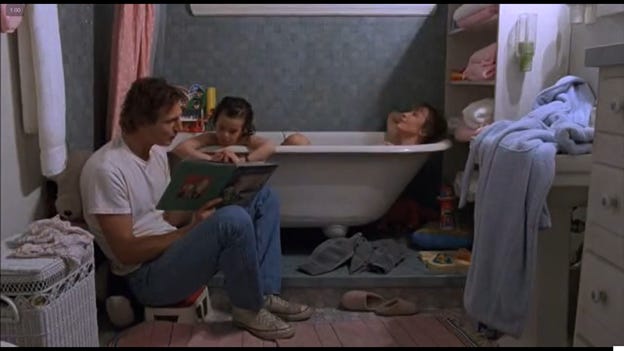
In a normal way for her age, the daughter is curious about the human body—Keaton in one scene reads her Peter Mayle’s sex explainer Where Did I Come From?, a mainstay for many kids of my generation, considered by others to be obscenely inappropriate. One day, seeing Neeson get out of the shower, the girl asks to touch his genitals and, caught by surprise but not wanting to shame the girl, he quickly lets her. Blessedly, this is not shown in the movie, but recounted in the lawyer’s office after Keaton’s ex-husband hears about it and sues for sole custody.
Keaton’s daughter isn’t upset by the interaction, so Keaton isn’t either and would prefer to just forget about it. Keaton wants to raise her daughter without the self-loathing that she knew as a child, and with the sense of happiness she knows now with her new partner. Stammeringly, she tries to articulate this to her lawyer: “I honestly didn’t feel . . . that there was a need for . . . all the rules and the lines…I mean. . . we were all of us very happy.”
The impulse of trying to give one’s child more happiness than one had as a child isn’t a bad one. But both Keaton’s character and the movie subordinate an objective consideration of the child’s welfare to the personal happiness of the mother. Keaton’s character does this by not distinguishing sufficiently between her childrearing and her own romantic bliss. The movie follows suit by contriving an enemy in WASP patriarchy and sexual repression, presenting Keaton as the victim of her family upbringing. Her ex-husband gets custody of her daughter, and she ends her relationship with Neeson, opting for a self-punishing solitude very much in the Puritan tradition, after all.
Hot-button issues aside, this is an airless and hobbled courtroom melodrama. Two great old actors, Teresa Wright and Ralph Bellamy, play Keaton’s grandparents. They have done far better.
[1] As mentioned in an earlier post, a clever use of post-divorce plot elements—a newly single woman on the dating scene, the tensions between her children and a potential new husband—for horror-comedy in the 1980s is The Lost Boys. Marital comedies as well as dramas involving marital estrangement and reunion continue, of course, e.g., Die Hard.