
The Children (1990)
The long-unavailable film adaptation of Edith Wharton's Jazz Age divorce novel.

Tony Palmer’s 1990 screen adaptation of Edith Wharton’s The Children stars Ben Kingsley, Kim Novak, and newcomer Siri Neal, with smaller parts played by Geraldine Chaplin, Karen Black, Rupert Graves, Rosemary Leach, Robert Stephens, and Britt Ekland. If you’re wondering why you haven’t heard of this costume drama (filmed on location in Switzerland, Venice, and Paris) with its formidable cast, it’s because the director had a falling out with the distribution company. The movie was never released except for a short, well-received showing on British television.
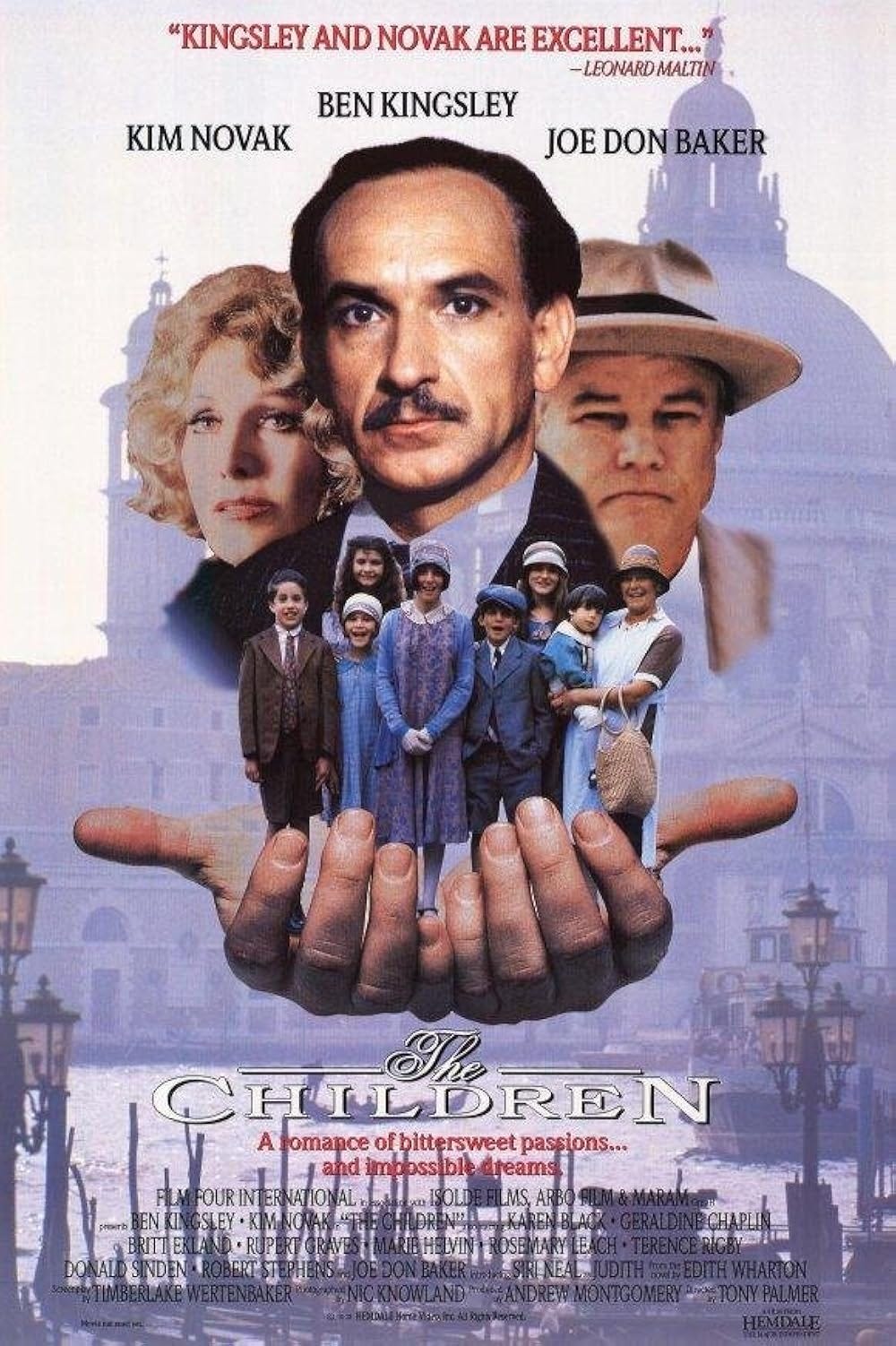
This turn of events is weirdly on the nose for a movie about a man’s obsessive concern for the welfare of his “children.” Kingsley plays 46-year-old Martin Boyne, a successful engineer traveling to Europe to propose marriage to Rose Sellars (Novak), an old friend newly widowed and so at last free for their mutual happiness. Except he runs into—and effectively adopts—a clan of seven children traveling with their nurses, the collective product of their wealthy and irresponsible parents’ various divorces and remarriages. This set considers “marriages just like tents—folded up and thrown away when you’re done with them,” says one of the characters in Wharton’s novel.
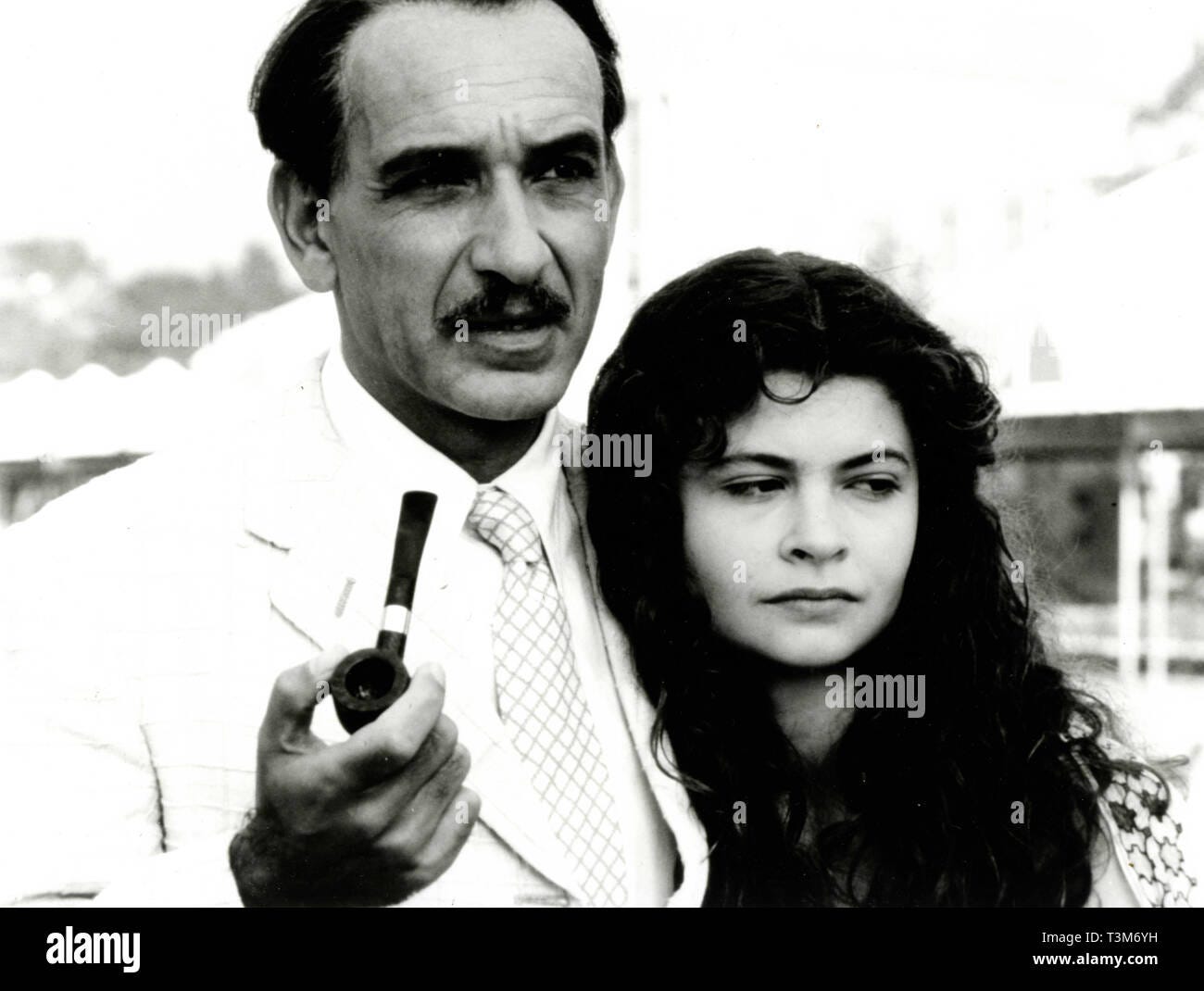
The childrens’ life is a chaos, yet Kingsley’s determination to rescue them from their parents’ neglect is soon complicated by his romantic infatuation with fifteen-year-old Judith, the oldest of the bunch, played with astonishing precision by Neal. Confused about his own motives, he manages to sabotage his engagement with Novak.
The movie is not a masterpiece, but it achieves real poignancy by the end. The chief tragedy of the film’s long unavailability is the neglect of the brilliant performances by then-17-year-old Neal and by Novak. Both actresses might have received Academy Award nominations.
Just a few years later, Martin Scorsese would release his magnificent adaptation of Wharton’s The Age of Innocence. Adapting The Children is different than the case of Wharton’s other novels, though, not least in that Wharton was by then quite aware of film as industry and medium. By 1928, when The Children was published, three of her other novels had been adapted as silent films.[1] The sound era had been inaugurated. The novel includes references to Hollywood, has a “movie star” as one of its characters, and even turns to film as metaphor.
“Life’s a perpetual film to those people,” Boyne tells Rose, explaining the difficulty of speaking sense to the childrens’ parents. “You can’t get up out of your seat in the audience and change the current of a film.” When Boyne tries to reassure Judith that her already divorced and remarried parents, now taking on new lovers and getting ready to divorce again, will “patch it up,” she rolls her eyes skeptically: “Like in the nicer kind of movies?”
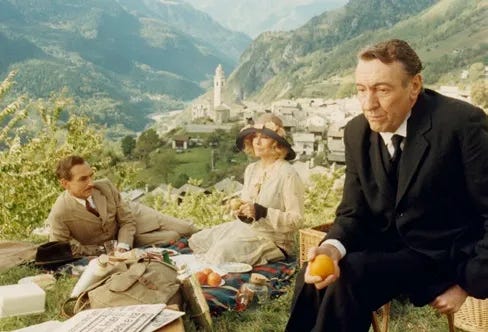
Wharton’s The Age of Innocence and The House of Mirth are far better novels, but The Children marks out Jazz Age territory with its spoiled, jet set parents inflicting lifelong moral damage on their children. And a number of the darker aspects of the book are as timely for the 2020s as the 1920s. There is the awful lesson of Judith’s friend Doll, another rich child of constantly divorcing parents, who committed suicide and whose mother is “always chock full of drugs.” There is the progressive stepmother who wants assurance that her stepchildren have been “properly psychoanalyzed, and that their studies and games have been selected with a view to their particular moral, allimentary, dental and glandular heredity.”
This woman is shocked that the childrens’ caretakers still employ “enforced obedience” to manage children, and she knows best since: “I took my degree cum laude, in Eugenics and Infant Psychology.” On hearing that the childrens’ nurse grew up with a dozen siblings, she expresses hope that large families will soon be abolished: “In the United States such matters will soon be regulated by legislation.” Change “Eugenics” to “Abortion Rights” and she could be holding a pumpkin spice latte and wearing an “I’m With Her” shirt.
What Wharton’s Boyne and Rose most regret in the changed times they see around them is its mass-culture sameness:
“The girl in peach-colour, over there by the column—lovely, isn’t she? Only one has seen her a thousand times, in all the ‘Vogues’ and ‘Tatlers.’ Oh, Martin, won’t it be too awful if beauty ends by being standardised too?”
Boyne rather thought it had been already, in the new generation, and secretly reflected that Mrs. Sellars’s deepest attraction lay in her belonging to a day when women still wore their charm with a difference.
Yet this wariness about the twentieth century does not entail a dismissal of the movies. Indeed, there are moments in the final pages of the novel that seem consciously cinematic, as when Boyne hopes to catch a glimpse of Judith at a dance:
At first he saw only a blur of light and colour; couples revolving slowly under the spreading chandeliers, others streaming in and out of the doorways, or grouped about the floor in splashes of brightness. The music rose and fell in palpitating rhythms, paused awhile, and began again in obedience to a rattle of hand-clapping. The floor was already crowded, but Boyne’s eyes roved in vain from one slender bare-armed shape to another.
Interestingly, the corresponding scene in Palmer’s film has Kingsley catch sight not only of Judith but also of Judith’s mother, now with a new husband. In these last minutes, Palmer brings into acute focus the painful irony of Wharton’s title: that the “children” of the novel are the adults, the modern Americans who do not know how to act except on their own changeable desires. In the absence of real adult behavior, Boyne fools himself into thinking his solicitude for the fifteen-year-old Judith is such missing maturity. He ends broken and lonely, in self-imposed exile in South America.
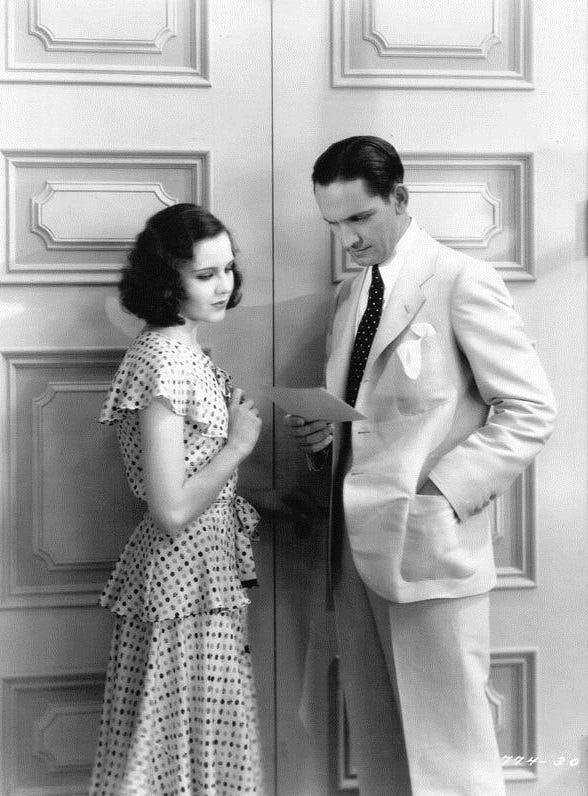
Palmer’s The Children is actually the second film adaptation of Wharton’s novel. The first was The Marriage Playground, a 1929 movie with Fredric March as Boyne. Clumsy with the transition from silent to sound—the acting is often stilted and exaggerated, as if waiting for title cards—parts of the movie are even more faithful to Wharton’s dialogue than Palmer’s version. But this cannot be said for the conclusion. Insisting on a happy ending that is nowhere in the novel, The Marriage Playground makes Judith 17 insread of 15—evidently considered old enough to get married to Boyne at the end.
[1] The House of Mirth (1918), The Glimpses of the Moon (1923), and The Age of Innocence (1924)—all lost.